
-

The Zandvlei Trust Chairman’s Report 2025
Welcome
Thirty-eight years ago, a small group of local residents decided that Zandvlei was worth fighting for. Not because someone told them to. Not because there was funding waiting. Because they looked at Zandvlei, its fauna, flora, and realised it had to be protected.
There is no other estuary like this one on the False Bay coastline. Zandvlei is it — the last functioning estuarine ecosystem in False Bay
The significance of Zandvlei cannot be underestimated, it is a fish nursery, a bird refuge, a water filtration system processing the runoff from tens of thousands of urban households and farms, and a home to endangered species that have nowhere else to go.
This past year, the Trust delivered more project work, reached more people, and invested more capital into Zandvlei than in any recent years. All of it achieved through volunteer effort and the generosity of our members and supporters.
And this is why we are here tonight, to continue to operate as a civil-society, volunteer-driven and apolitical organisation, guided by our founding mission: to protect and conserve the Zandvlei Estuary Nature Reserve, and to enhance the indigenous fauna and flora of this natural resource for the benefit of all.
Zandvlei is under pressure, every day.
The Sand and Langvlei River catchments flow through farms and densely populated suburbs before they reach the vlei.
What gets thrown in the streets, washed into the drains, dumped on the riverbanks it all ends up here.
The primary threats we see for Zandvlei are:
- Solid waste and plastic pollution entering the vlei via the many canals
- Invasive alien vegetation
- Deteriorating water quality from urban and farming runoff;
- Habitat degradation and loss of green corridors across areas;
- Lack of awareness and education of the reserve’s biodiversity value.
Against this backdrop, the Trust ran 15 projects in 2025, across four pillars:
Conservation, Community, Education, Research and Citizen Science.
None of these were funded by government. All of it was driven by people and organisations who chose to show up.
Projects
Sand River Litter Traps
David Bristow
Nets maintained; one 6yr net replaced; pilot metal-grid installation lost in floods but upgraded with steel-cable anchors
Litter Programme (Fish Bins, Litter Traps, Glass Bins)
David Bristow and Elfriede Webb
Weekly collection maintained; ~20 bags/week in winter, ~10 bags/week in summer
Westlake Garden
Damian Gibbs and David Bristow
Block A fully cleared and replanted; Block B cleared and ready for indigenous planting
Boyes Drive Hacking
Karen Hart and team
Monthly alien vegetation clearing on Muizenberg mountain slopes continues
Row Play Park
Dale Lawrence and Campbell Tyler
500m² cleared and planted with 750 plants and 1,000+ cuttings of Cape Flats Dune Strandveld and Cape Lowland Freshwater Wetland species; strong survival rate through a short rainy season; play equipment refurbished (swings, merry-go-round, see-saws repainted; rusted slide removed); 30+ community volunteers participated in planting; ZVT sponsorship signage erected
Photo Competition and Calendar
Damian Gibbs
2026 calendar competition held; 12 winning images selected
Citizen Science / iNaturalist
Damian Gibbs
iNaturaist training event held by Darren November
Finances
Total income for the nine months ended 31 December 2025 was R186,107 against expenditure of R146,273, netting surplus of R39,834.
Significant payments made during the period:
R57,500 to fund Row Playpark Phase 2, and R50,000 to the Mapula Trust for Environmental Education.
The Treasurer’s full report and audited statements will be presented separately.
Weekly Litter Collection Efforts
Taking a closer look at litter management which remains the Trust’s biggest and challenging task, environmentally, socially and logistically. The Sand River nets and grates is our relentless and most unglamorous commitment as a first line of defence to litter pouring into Zandvlei.
This intervention is estimated to intercept about 300 cubic metres of solid waste annually. For those who work in South African cubic measuring system, that’s about 250 bakkie loads, almost 5 per week, one a week day.
After two years of flood failures, the Trust has installed an interlocking metal-grate system with steel-cable anchors.
Nylon nets face a constant barrage of plastic waste, logs, furniture, appliances, car parts and worse, require ongoing maintenance, cleared weekly by a council sub-contractor, with the Trust maintaining backup capacity.
Our three ‘litter fish’ bins, positioned at each end of Thesen’s footbridge and at the Wildwood Island entry, are cleared and maintained on a regular schedule, with bags collected by the Nature Reserve team.
The glass recycling bins on the Lakeside road reserve, one of the Trust’s oldest projects, has been withdrawn after persistent abuse rendered them counterproductive.
Partnerships
The Zandvlei Trust does not work in isolation. Our projects are designed to complement and extend the capacity of the Zandvlei Nature Reserve management and we maintain active working relationships with the following organisations:
City of Cape Town (ZNR Management) Joint project delivery for Row Play Park and Westlake Garden Cape Bird Club Assist with bird count days at Zandvlei Zandvlei Protected Areas Advisory Committee (ZPAAC) Advisory committee membership Muizenberg Improvement District (MID) Co-funder of Thesen’s Bridge and Henley Road Park restoration Orchard Village Restoration Supported river clean-up Ingcungcu Gardens Generous budget contribution to Thesen’s Bridge Green Muizenberg Co-hosted World Beach Clean-up Day 2025 Karen Hart / Boyes Drive Team Monthly alien-clearing operations on Muizenberg mountain slopes Zandvlei Catchment Forum ZVT Exco representation Community Reach and Awareness
Beyond the physical restoration projects, the Trust maintained a regular programme of community engagement, public education and awareness-raising:
- First Saturday events: weather permitting rotated between litter cleanups, garden restoration
- Environmental education programme through ZENR: 8 sessions delivered reaching 141 children and 49 adults.
Programmes were run with Sullivan Primary and the Youth Environmental Cubs Club was launched (11 children, ages 7–12). - Spring Talks series presented in September 2025 at The Lookout, Lakeside: free public admission and very well received.
- 2026 Zandvlei calendar photo competition: entries from adult and junior photographers; 12 winning images published in fundraising calendar
- Reserve nature walks led by ZNR staff: July 2025 (27 participants; Stacy-Anne Michaels) and November 2025 (Kyran Wright; highlights included sightings of the critically endangered Kedestes lenis lenis skipper butterfly).
- World Beach Clean-up Day 2025: joint event with Green Muizenberg
- Marine Estate Open Gardens (October 2025): nine private gardens in the Marine Estate area opened to the public, organised by Naomi Porter. Entrance fees were donated to the Trust. The event demonstrated the growing connection between the Marine Estate community through the Row Play Park restoration work, and the wider Zandvlei mission, this is a model of neighbourhood-level conservation ownership that we hope to build on.
Social Media
The Trust’s social media presence grew substantially.
On Facebook, the past year generated over 400,000 views, an 82% increase in engagement and 18% increase in followers to approximately 2 300.
Our Instagram account has also significantly grown with reaching to about 1 000 accounts, predominantly in the 25–35 age group.
Our posts regularly reach beyond just our follower base with a recent post reaching over 31,000 people, the majority of whom were not followers.
The Comment sections have become a meaningful channel for environmental education: followers regularly pose substantive questions about the reserve’s ecology, history and conservation challenges.
This shows that there is a real interest in Zandvlei from audiences beyond South Africa, stretching to UK, Germany and Zimbabwe.
Challenges
The Trust operates with a small volunteer committee and no full-time conservation staff. While we might see the projects we are working on around Zandvlei as admirable, it is not with out some operational risks and challenges:
- Litter trap infrastructure failure: one Sand River net (6 years old) broke and required urgent replacement; the pilot interlocking metal-grid system was lost during winter floods when anchor ropes snapped, steel-cable anchors have been reinstalled
- Municipal contractor reliability: the partnership with city supplier for litter-net clearing is an improvement but not at all dependable; ZVT maintains backup clearing capacity
- Dependency on volunteerism: all committee members serve in a voluntary capacity for administrative and many physical tasks; there are many opportunities to make a greater impact but would take dedicated staff and funding
- Water quality deterioration: The catchment remains a systemic risk beyond the Trust’s direct control; Prof Winter’s Spring Talk highlighted the scale of the challenge
- Vital knowledge gaps: water quality monitoring in the Zandvlei Catchment; what constitutes the sediment in Zandvlei and its sources, this is a critical area for research
Looking Ahead
The Trust’s programme for 2026 involves building on expanding out projects and some new projects.
- Sand River litter-trap upgrade: steel-cable anchor installation and system reliability improvement
- Henley Road Park: joint venture with MID to improve the equipment and ecological restoration
- Thesen’s Bridge: more resotoration by creating a critical link between east and west Zandvlei restoration corridors
- Westlake Garden: indigenous planting scheduled for the next section
- Dog Waste Composting Pilot: implementation at Row Play Park
- Education and Citizen Science: post-graduate research funding around sedimentation and water quality in Zandvlei and the catchment
We need your support
We are going to be direct. Zandvlei needs more resource than a volunteer committee can provide alone.
The ecological pressure is growing.
The opportunities — more restoration, more education, more research — are right in front of us.
What is missing is sustained funding.
Just to be clear, The Zandvlei Estuary Nature Reserve is a proclaimed protected area managed by the City of Cape Town and the Trust works alongside the City’s reserve management team extending their reach, amplifying their capacity, and advocating for the reserve’s long-term health.
This distinction matters when we talk about partnership. We of course cannot offer any rights to a public asset. Howeve, what we can offer is something less transactional and, we think, more enduring: a genuine stake in the work.
If you or or your organisation, or your employees care about Cape Town’s coastline, its catchment water systems, its biodiversity, or the communities that live alongside them, then there is real and meaningful work to be done here and we would value your support to do more of it.
The problems Zandvlei faces are not small and challenges a volunteer committee can solve alone.
Funding the Trust is not a sponsorship transaction. It is a decision to put your organisation’s resources behind a community that has chosen to take responsibility for a place that belongs to all of us.
In return, we will keep you informed, involve you where it makes sense, acknowledge your contribution publicly, and most importantly make sure your money reaches the ground, or water.
As a wrap, here’s what we’re working on and where support makes the most difference
AREA CURRENT NEED NATURE OF THE WORK Habitat restoration Thesen’s Bridge (3,800m²), Henley Road, Westlake Garden Invasive clearing, indigenous planting, community volunteer coordination in collaboration with ZNR Litter interception River catchment and storm water litter-trap systems Engineering, maintenance and clearing of the primary barrier between urban catchment and the vlei Environmental education School programme, Youth Environment Club Connecting people to the reserve — holiday programmes, field visits, citizen science expeditions Community engagement First Saturdays events, nature walks, Spring Talks, photo competition Building the base of people who know and care about Zandvlei Research and monitoring Catchment water and sediment analysis, biodiversity monitoring and research Research to update and expanding knowledge about Zandvlei and catchment; student-led with university and college partnership Operational continuity Committee support, administration The Trust runs entirely on volunteer time; any funded capacity multiplies what we can deliver Acknowledgements
The 2025 years achievements are the result of the sustained effort of a large number of individuals who give their time without remuneration. I wish to thank:
- The Executive Committee – Dr David Walker, Dale Lawrence, Kate Gray, Annamia van den Heever, Elfriede Webb, Mitzi Ellemers, David Bristow, Lauri-Anne Veitch and Campbell Tyler – for their commitment, energy and expertise throughout the year;
- Karen Hart and her team, for uninterrupted monthly alien-clearing operations on the Boyes Drive slopes;
- Stacy-Anne Michaels, for her appointment as our Community Liaison Officer and the energy she has brought to the education programme;
- Lisa O’Malley (ZNR intern), Stacy de Jager and Kyran Wright (ZNR), for leading education and nature-walk activities;
- Darren November and the ZENR team for all they do that we don’t see or hear.
- Hannes Kok, Anthony MacLennan and the Orchard Village restoration team;
- William, Geoffrey, Blair, Wilson, Peter, Robert, Russel, Cuma, Mzwanele, and Amoss – the ground teams whose consistent work transformed the Westlake Garden, Row Play Park and the start of Thesen’s Bridge;
- All our speakers at the 2025 Spring Talks – Dalton Gibbs, Prof Kevin Winter, Patrick McKenna, and David Muller stirring rendition of Whale Nation;
- The Muizenberg Improvement District, Ingcungcu Gardens and the ZENR management team for their collaboration on the Thesen’s Bridge project;
- Our event sponsors: Pam Golding, BDS Steward;
- On going donations: Plastics SA;
- Naomi Porter and the Marine Estate community, for organising the Open Gardens event and for embracing the Trust’s work in the Row Play Park area with such energy and generosity;
- Every member who paid their subscription, members and non-members who donated, attended a First Saturday, picked up a piece of litter, or told someone else about Zandvlei.
Conclusion
The Zandvlei Trust enters its 38th year with a broader project portfolio, a strengthened community programme, and a more structured approach to managing our projects and project funding.
The ecological pressure on Zandvlei has not diminished, but neither has the resolve of the Zandvlei Trust members and partners to push back against it.
We invite all members, partners and prospective funders to engage with us directly. Every Rand we raise is deployed directly back into Zandvlei. Every hour volunteered is an hour the Zandvlei would not otherwise have had.
Zandvlei is not just a public amenity, a convenient spot for a lekker braai or a pleasant walk, though it is those things too, and they matter very much. It is a functioning, living estuary: a fish nursery, a water filtration system, a refuge for species that have no other home on this coastline.
What makes Zandvlei extraordinary is what makes it vulnerable: everything that flows through the Sand-Langvlei River and Keyser river catchments, our streets, our gardens, our stormwater drains, ends up here.
So how we look after Zandvlei and the catchment is a statement about who we are as a community and what we value.
The Zandvlei Trust does not own Zandvlei, but we hold it in trust – for the citizens of Cape Town, for the animals that depend on it, in honour of the first people shared in its abundance, and for the people who will inherit whatever condition we leave it in.
This is not a burden. It is the point.
-
Orient Road
By Peter Tyldesley
When we moved into Orient Road, our front view was the mountain, our eastern boundary the vlei, the southern boundary the Muizenberg beach and to the north the vlei and wetlands which extended from Lakeside station to Steenberg station on both sides of the railway line. An absolute paradise for a young naturalist.
At that time there was a the jetty located approximately fifty metres on the southern side of the second ablution block. The jetty became the meeting point for many of the boys living in the area. Almost every weekday and every weekend they would come together there to fish. In the early sixties, before the weir at the mouth, the seawater would reach all the way to the main island, the current island in the northern part of the vlei. There used to be two islands. The second smaller island, located between the large island and the station was dredged away when the marina was built.
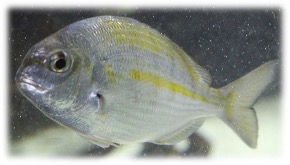
The prime target fish was, as it still is, leervis. But haarders (mullet), Cape stumpnose, White stumpnose and juvenile white steenbras were very common. There were occasional exceptions. If you managed to get your line out far enough in the direction of the campsite on the other side of the vlei directly opposite the jetty, you could catch an elf, or at least have the telltale evidence that one had visited your offering. The tail section of your haarder would be missing and there would be a semi-circular bite out of the body just below the anal fin. Surprise catches included Joseph’s sharks, wildeperd and dassies (blacktail).
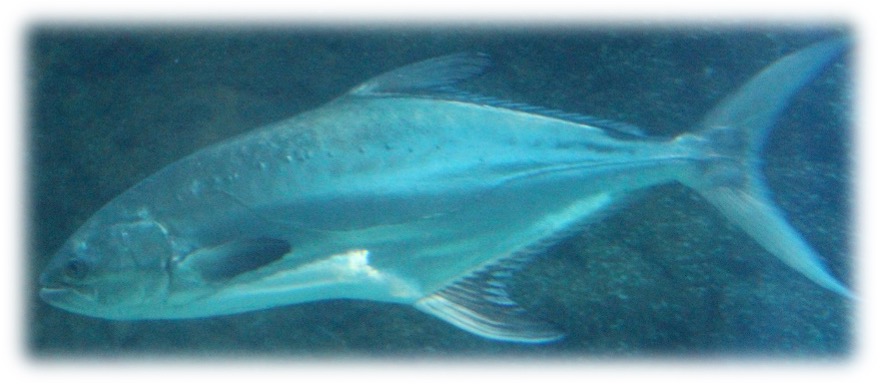
We used livebait to catch the leervis. Either haarders, which were caught using a milkbottle, or “bonies” which were smaller, but almost guarenteed to attract a leervis, if they were not stripped off the hook by larger Cape stumpnose first. If we wanted to target a large leervis, we would catch a small white stumpnose for bait. But then we knew we would have to wait a while for a bite and we were very impatient youngsters. We would rather catch four or five fish in a short time than wait for a big one. On one occasion I lost my handline and scratched around amongst Dad’s fishing bags for pieces of line which I knotted together to make a long enough line to caste out. I managed to catch a cape stumpnose for live bait and put it out for a leervis. I was messing around on the jetty with some friends when I noticed that the line, which I had tied to a pole, was taught. I rushed to the line and as I lifted it it snapped with a loud twang. That was a very large fish!.
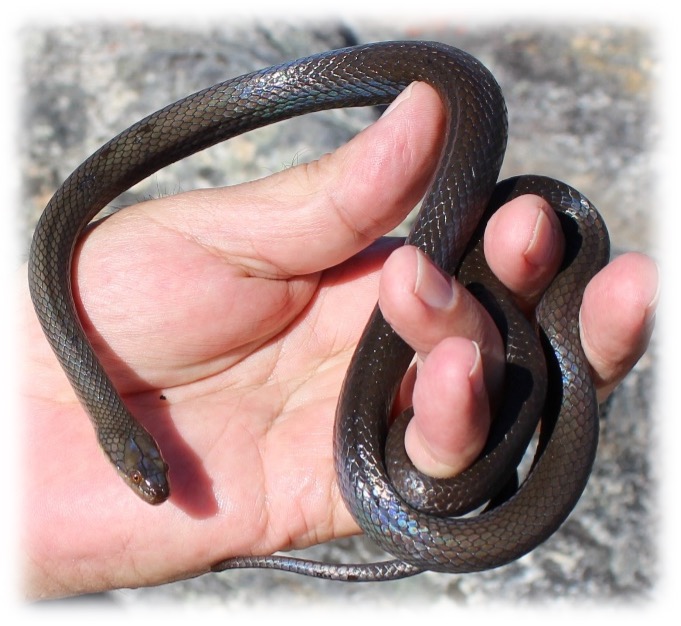
The strip of land between Promenade Road and the railway line was a swamp which was quite deep during winter (chest high). I know because I was playing Tarzan one day and the branch I was standing on broke off and I fell in and nearly drowned. The vegetation was dominated by stinkbean and willow trees – both invasive aliens. Most of the water disappeared during summer, but the deeper areas still remained damp. The perfect environment for watersnakes. On a day I was walking home after fishing, and out of curiosity I lifted a piece of malthoid which had been discarded. And there I found the first watersnake I kept as a pet. Needless to say, my mother was very uncomfortable. But my father understood and helped me build a suitable cage. He also purchased a copy of Walter Rose’s “The Reptiles and Amphibians of Southern Africa” (which I still have). He wanted to make sure I had at least a basic idea of what I was catching because he had a premonition that I would be bringing home many more snakes, some of which had nasty dispositions and were quite capable of shortening your expected lifespan. I read and paged through that book almost every night until the pages started falling out.
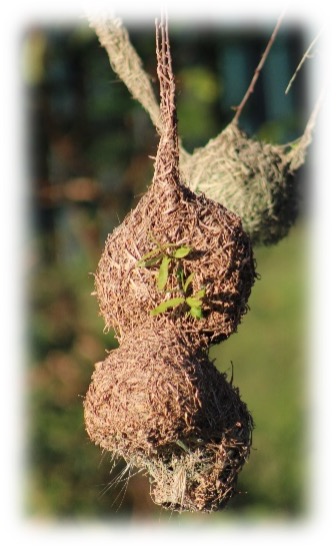
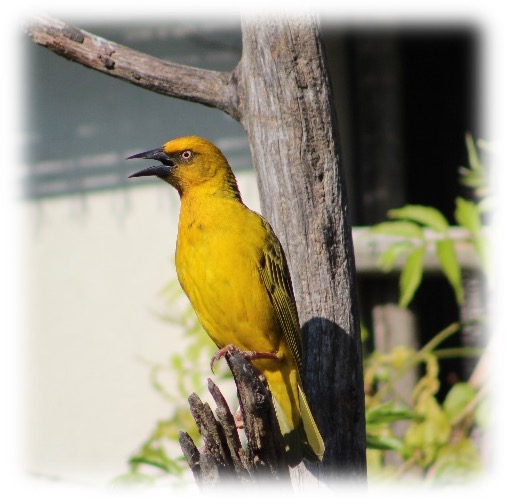
The strip between Promenade and the railway line was not the only wetland. The piece of land directly adjacent to the station on the vlei side was also a significant wetland during winter, with the water reaching the turnups of your shorts after a good rain. I knew this because my mother would take one look at me when I came home and say: “You have been walking in the vlei by the station. How many times must I tell you not to walk in there? If something happens to you in those reeds we will never find you”. But I was inquisitive and there were all kinds of wonderful discoveries to be made inside the thick reedbeds. The Cape weavers had their nests in there as well as the odd masked weaver and dabchick (little grebe). And so I kept going in there until one day I was working my way around a fairly large rooikrans bush when I came upon a dog which had only recently died in a shallow pool of water. It was very creepy. The next time I went past there I saw that someone had filled in the swamp and they had built a house there!
-
WALKING TO THE BEACH
by Peter Tyldesley
We could hear the waves and smell the beach from our house in Cromer Road. So I suppose it was just a matter of time before I walked to Surfer’s Corner to explore the rock pools. My father had allowed me to fish the vlei all the way to the mouth, because he knew where to look for me if I wasn’t home on time. But I was under strict instruction not to wander off course. There were no GPS’s in those days and you did not need one. There was a strap hanging behind the bedroom door which had the most amazing telepathic capacity to guide you home via the shortest route and within milliseconds of the cut-off time.
I had befriended Malcolm, who had replaced Klasie, and one Saturday morning when my father was working overtime, Malcolm popped around and suggested we wander down to the beach. I told my mom that Malcolm and I were going to walk to the mouth of the vlei, and she raised an eyebrow, looked at me sternly and said : “OK, but don’t go anywhere else, and make sure you get home before your father.” Mothers seem to know what you’re going to be thinking next week Wednesday. Anyway off we went.
We hit the beach where the bathing boxes were, and it was spring low tide. The sand flats exposed by the receding waves were littered with an assortment of mussel shells. One particularly large brown shell with a rough scalloped exterior caught my attention and I picked it up and took it home for identification. It turned out to be a horse mussel which has a particularly interesting and somewhat incestuous symbiotic relationship with a small round crab. Photo Zandvlei Trust
But it was the rockpools that caught my attention. The shallow pools were full of large grey bullhead gobies and green klipfish. Clusters of sand anemones grouped together in sandy areas where there was a strong waterflow during high tide. They can survive being covered in sand for fairly lengthy periods. In the more sheltered corners purple, red and pink urchins gathered over small beds of green algae, and rock crevices sheltered several species of chitons, whose ancestry precedes the dinosaurs. Many of the pools which were located higher up on the beach were filled to capacity with black mussel shells. The same shells that the Dutch burned in lime kilns to make the cement which still holds the stone walls of the Castle together.
But the real magic appeared when you poked your head in under one of the larger rocks which was only exposed at spring low tide. A kaleidoscope of colour. Feather duster worms, bright orange sponges, plum anemones, sea stars, squirting redbait – an incredible diversity of species. You could easily spend half an hour crouched under one of those rocks, in absolute wonder. But the ocean is full of tricks. The long, suckered tentacles of an octopus arm exploring the inside of your leg will bring you back to earth in a flash!
On the way home we walked down Clevedon road and on the corner with Albertyn Road there used to be a large manatoka hedge, behind which was an empty plot. There was a very large Cape skink lying there in the sun. Malcolm threw a stone at it and it disappeared under the manatoka. When my father arrived home he asked me where I had been, and I confessed that I had been to the beach. Because I was honest and because I had gone with Malcolm, Dad did not get angry, but told me he wanted to know whenever I went and who I was going with. Then I told him about the skink, and he did get angry. “Why do you want to kill everything?”
That afternoon, after the customary muscadels, my father and I walked down to the large Rooikrans bush which provide shelter for a number of Cape skinks. In a howling Southeaster he got down on his hands and knees slowly crawling around the bush hoping to surprise a dozing skink. I thought that I would stalk the skinks from the other side of the bush. Just as dad was about to pounce, I appeared from the opposite side. The skink saw me and dashed off. Dad looked up at me and there was murder in his eyes. He never said anything, but I knew what he was thinking!
We sat back and waited a bit. Those skinks had become used to people walking past the rooikrans bush, and it didn’t take them long to appear again and settle in to some sunbathing. Dad got down again and this time I let him do it on his own. He was quick off the mark and I wasn’t too sure that I could outlast him if I accidently awakened the skink he was targeting. Not too long and he had one. The poor skink got such a fright that he dropped a turd and his tail at the same moment. The tail lay trashing on the sand for a while. Dropping its tail was a clever party trick to distract evil-eyed predators while the skink made a quick getaway.

My father then proceded to show me the skink and explained that it was not poisonous – he let it bite his finger – and informed me that there were no poisonous lizards in South Africa. He pointed out the eyelids which enabled the skinks to close their eyes and doze off. Our marbled leaf-toed geckos on the other hand don’t have eyelids. Their eyes are protected by a firm clear scale which they have to lick with their tongues to keep clean. He let me hold it and then told me to release it. If any more of its tail fell off it would not have the balance to run away in a straight line.
I lowered the skink gently and watched in wonder as it zigzagged off into the rooikrans bush.
At supper that night my mother informed us that we were going to move to Lakeside. Her offer for 42 Orient Road Lakeside had been accepted.
That session with my father had piqued my interest in reptiles. An interest which was about to explode into a fanatical lifelong passion.
-
CRACKING THE CODES
By Peter Tyldesley
In any environment it takes time to settle in and crack the codes. The time it takes you to become integrated and fully operational depends on how observant and aware you are, and often how many cracks you have had. Clips become cracks as you get older and you get cracks when you don’t get home on time.

In the heat of summer, there were no earthworms, so I had to find another easily accessible bait to catch the steenbras. There were no prawn pumps in those days so I was scratching for an alternative. I walked to the footbridge one Saturday morning when the tide was pushing. There was a fur seal lounging on the concrete bridge support under the bridge on the Capricorn side of the vlei. I watched him for a while and then walked on to the main bridge near the mouth. Over the course of the next two years I saw him in that spot quite often.
The water was exceptionally clear, and for the first time I noticed sandshrimps swimming in amongst the grass and weeds up against the bank. There were no reeds on this section at that time, and the waves pushed in past a large sandbank which was located in the middle of the vlei on the northern side of the footbridge. I went home and told my dad about the shrimps. He told me to wait for low tide. Four muscadels later my father turfed the last of the potatoes out of the hessian bag they used to be packed in in those days, and cut the bag open all along the seam. We had a net!
Together we walked down to the vlei and jumped in. With dad on one side and me on the other, we dragged our net along the sandy bottom and up under the grass verges. Shrimps galore, flicking all over the place, and in the middle of the net, a light brown pipefish. The first I had ever seen. It had a scalloped body, with a long snout and a tiny mouth. Just like a seahorse which had been stretched out on one of those medieval torture racks.
On about our fourth trawl dad stepped on a sharp submerged branch, and I got my first lesson in men’s talk. Apparently at eight years old you are ready to become a man.
For the next two years, that net produced endless excitement, because we never knew what we would find. Besides the shrimps and the pipefish which were routine catches, there were juvenile mullet and steenbras, and on rare occasions a juvenile leervis, with its black and orange body and prodigious lower jaw. It looked nothing like the streamlined silver superpredator it would morph into. Some of the steenbras we caught in the net were tiny, only five centimetres long. While working on a conservation project on the Eastern Cape Wild Coast many years later, I was shown some photographs of large white steenbras shoaling in an estuary and was led to believe that this was a tributary which needed special protection, as it was one of the few places that white steenbras came to breed. I was also informed that these fish only bred in the estuaries of the Eastern Cape. I have often wondered about that, as I netted so many of the tiny juveniles in Zandvlei. As a student and avid scubadiver, I occasionally cleaned the hulls of yachts moored in Simon’s Town harbour, to make a few bob to pay for the beers and tassies that the bursary didn’t cover. On occasion I came across shoals of large female (I suspect) white steenbras feeding on the extensive prawn beds on the soft sandy bottom stretching almost all the way to the bullnose. I have often wondered if these fish were not entering Zandvlei to breed. I have never really answered that question.
Besides the steenbras, harders (mullet) became a favourite fishing target. It happened quite by accident. I was sitting at my favourite spot one afternoon after school eating a peanut butter sandwich. The last crust of the sandwich contained no margarine or peanut butter and I turfed it into the water. To my surprise the bread was almost instantly attacked by a school of harders. The last little piece was engulfed by a sizeable fish, which immediately caught my attention. I went home quite early, tidied my room and made sure the kitchen floor was clean, and waited for dad. When he came home the first things he asked me were: “Have you been fishing again? Have you done your homework?” Aaai. I hadn’t thought about the homework.

After supper dad unlocked the closet and we scratched around for some thin fishing line, small hooks and a round float, those little red and white ones which you simply clip onto the line. We wound a considerable length of line onto the hasper (a piece of wood with notches on both ends used for handlines), tied on a small hook and attached the float and I was ready to go.
Catching harders became my favourite pastime for the two years we lived in Cromer road. Unlike the steenbras, which tend to prefer slightly deeper water which is a little murky or cloudy, harders seem to be happiest in the crystal clear fresh seawater pushing in on the high tide. They readily accepted bread as bait, whether it was squeezed onto the hook, or dampened and turned into a doughball. After several months I graduated from the red and white plastic floats to a porcupine quill, which if set properly on the line stood up vertically in the water and disappeared in a flash when you got a bite (or a “take” as it is known in fisherman’s parlance).

Catching harders took on a greater significance after I caught my first leervis, which again was quite by accident. There were some big harders near the footbridge, but they simply refused to take the bread I offered. Frustrated, I tried to foulhook them with a treble hook (we called it an angel –Afrikaans pronunciation). On my second caste a leervis of forty centimeters grabbed the treble hook. It fell off as I got it to the side but I managed to grab it and carry it home. My dad put it in the deep freeze, as he wanted to preserve it with formaldehyde. Three days later a fishing mad friend of my father came to visit us. He had never caught a leervis before and offered to take it home and have it mounted.
I never saw that leervis again.
But that friend did tell me that harders were the favourite prey of leervis. Then he showed me another trick. To catch a number of harders in one go, all you needed was a milkbottle and some bread. You took the bread, wet it and massaged it into a doughy paste which you squeezed into the mouth of the milkbottle. Then you walked along the side looking for a shoal of harders feeding on the bottom. Walking ahead, you carefully submerged the milkbottle, with the breadpaste on the bottom half of the mouth. In no time the harders would be crowding around the bottle trying to feed on the bread, and some would be pushed into the bottle by those behind them trying to get to the bread. You could catch eight in one shot!
Having taught young people for forty odd years, I believe that some children are born to be naturalists, others are born to be petrolheads, a few will naturally become academics, and a small unique group are Keith Richards clones, able to smoke forty Lucky Strike cigarettes a day at the age of twelve.
I was the naturalist who caught my first “snake”, a dwarf burrowing skink, at the age of four. I took it to bed with me and refused to give it to anyone – until my grandmother paid me fifty cents to flush it down the toilet. I have never forgotten that day – and never forgiven myself for that deed.
But then again you could buy four hundred chappies bubblegums for fifty cents.
-
MEMORIES OF A YOUNG LAKESIDE NATURALIST
By Peter Tyldesley
ARRIVING IN PARADISE
In 1963 my loving mother decided to move the family from Goodwood (pronounced Gooroet) to False Bay. She was of the opinion (quite rightly so) that Klasie, the boy next door, who was five or six years older than me, was teaching me things I was too young to understand, and should not know anything about anyway.
We moved into the top storey of a large house in Cromer Road. For a fanatical budding young naturalist it was paradise : the vlei, the mountains and the beach.

My job was to collect earthworms, and I was very good at it. So good in fact that I got a clip around the earhole, when I walked into the house with my hand over my schoolblazer pocket to prevent the earthworms from crawling out and falling onto the floor. Parents were allowed to give you a clip in those days.
We cast our lines into the water, and almost immediately the juvenile steenbras started biting. I cant remember how many we caught, but it was plenty – all between twenty and thirty centimeters in length. They were all released, but I was hooked for life. After a good supper and a good few glasses of white muscadel (remember that?) the family went off and I was sent to bath and to bed. That night I dreamed of mighty battles with giant white steenbras, and how I would proudly lay them down on my mother’s spotless kitchen floor. My dreams stopped just short of another clip around the earhole for messing on the floor.
Some weeks later, after a heavy morning shower, the street gutters were alive with earthworms. After school I walked home from False Bay station, and once again picked up a few handfuls of earthworms. But this time I only filled my pocket halfway. I knew dad didn’t like it when I filled the pocket to the top. Racing upstairs, I spread my schoolclothes all over the room before pulling on my shorts and T-shirt. Then I hurried to the closet where the smaller fishing rods were kept. Locked! Dad didn’t want me to go fishing on my own.
In despair I started hunting around the house for a makeshift fishing line. I found a hook in my room, but there was no line. After searching every room I eventually found myself in my mom’s sewing room, where I discovered several spools of strong, colourful crochet cotton. That would have to do.

Down at the vlei, at what would become my favourite fishing spot, I tied the lengths of crochet cotton together, until I had a line of about 20 meters in length. I found a small stone for a sinker, tied on the hook, baited it and threw in. The steenbras started biting immediately, but the hook was just too big to catch them. When I was down to my last two earthworms I made a mental note to fill both pockets next time – only halfway. I put the last worm on the hook and almost immediately got a really decent bite. After a real struggle, I managed to land a steenbras of approximately thirty five centimeters. This was a keeper!
Time to go home.
Then I found out that crochet cotton doesnt behave like fishing line when it is wet. It has magical qualities. It can contort and twist into a million knots while just lying there in the grass. It was getting late and I knew if dad came home before I got home I was in big trouble. REALLY big trouble. The crochet cotton had now transformed itself into a net. If I had only known it would do this in the first place, I need not have worried about the potential risks of collecting the earthworms. I could simply have used it as a fishing net. Try as I may, I couldn’t untangle it, and eventually I simply scrunched it up into a ball and pushed it into my pocket. I grabbed at the steenbras, and promptly got spiked by the very long, sharp dorsal spines. I didn’t curse – you weren’t allowed to in those days!
As I turned the corner into Cromer road I knew I was in trouble. Dad’s big black Buick was parked outside. I ran up the stairs leading to the kitchen, opened the door, and found my parents in the kitchen. As calmly as I could, I put the steenbras down on the kitchen floor, and stood back admiring my prize. Bang, bang! “How many times must I tell you…..”. “Get that fish off my floor!”
I grabbed the steenbras and rushed outside onto the landing, standing there awkwardly and not knowing what to do. Finally, my father called me back inside and told me to put the fish in the sink.
I really should have let that dream play out to the end.
-

Capture the Spirit of Zandvlei: Submit Your Photos for Our 2025 Calendar!
Do you have a stunning photo of Zandvlei you’re proud of? Now is your chance to share it with the world and support a great cause! The Zandvlei Trust is excited to announce our “Give it your best shot” photo competition, and we are looking for your most captivating images to feature in our 2026 fundraising calendar.
The theme for this year’s competition is “Zandvlei — conservation and community.” We want to see the vibrant life of our beloved vlei through your eyes. Whether it’s a breathtaking landscape, a majestic bird in flight, a quiet moment of nature, or people enjoying the water, we encourage you to capture what makes Zandvlei special to you. This is a chance to show that Zandvlei is not just a place, but a living, breathing ecosystem that supports both wildlife and a thriving community.
This competition is open to everyone! We have two categories: one for adults and a special junior category for those 16 and under. Your passion for photography could earn you some fantastic prizes, including ORMS vouchers for adults and cash prizes for juniors, thanks to our generous sponsor, Pam Golding Properties.
Your photo could be one of the twelve chosen to be printed in our glossy, high-quality calendar, which will be sold to raise essential funds for the Zandvlei Trust. It’s a wonderful way to contribute to our mission and have your work celebrated.
How to Enter:
- Theme: “Zandvlei — conservation and community”
- Deadline: October 31, 2025
- Email: Send your photos to photos@zandvleitrust.org.za
- Requirements: Maximum of three photos per person. Photos must be in landscape orientation, at least 1MB in size, and taken within the Zandvlei Estuary and its immediate surroundings.
More details at https://zandvleitrust.org.za/events/give-it-your-best-shot/.
We can’t wait to see your incredible submissions and celebrate the beauty of Zandvlei with our community. So grab your camera, explore the area, and give it your best shot!
-

This Week: Join Professor Kevin Winter for a Crucial Discussion on Water Quality
The Zandvlei Trust Spring Talks continue this week with a vital discussion on one of the most pressing environmental challenges facing our community: water pollution. Following last week’s inspiring talk on the rescue of the Cape Flats Erica, we are turning our attention to the health of our waterways and wetlands.
This Tuesday, September 16th, we are honored to host Professor Kevin Winter from the University of Cape Town. A leading member of the City’s Water Quality Committee, Prof. Winter will share his extensive knowledge on nature-based solutions for treating polluted stormwater.
The health of Zandvlei is inextricably linked to the quality of the water that flows into it. Polluted stormwater runoff, a common problem in urban areas, can have devastating effects on our local ecosystem, impacting everything from fish populations to the plants that filter our water. Prof. Winter’s talk will explore innovative, sustainable approaches that work with nature, not against it, to address this issue head-on. This is an opportunity to learn about the science behind these solutions and understand how they can be implemented to protect and restore our precious natural resources.
Your participation is crucial. By attending these talks, you are not only gaining valuable knowledge but also showing your support for the work of the Zandvlei Trust and helping us advocate for a healthier environment.
Looking Ahead: We are finalising the details for our third talk on September 23rd. Please keep an eye on our website and social media channels for the official announcement.
Join us this week and become an even more informed and active steward of our local environment. Find more information and register for the talk on our events page.
-

Dive into Local Environmental Solutions with the Zandvlei Trust Spring Talks!
Get ready to be inspired! The Zandvlei Trust is thrilled to announce our annual Spring Talks, a series of fascinating public discussions aimed at shedding light on critical local environmental issues and how we can all be a part of the solution. This is a unique opportunity to learn from leading experts and connect with like-minded community members who are passionate about the future of our vlei and its surrounding ecosystem.
Our first talk, taking place on September 9th, features Dalton Gibbs, a long-time conservation manager for the City of Cape Town’s reserves. Dalton will share the incredible story of the endangered Cape Flats Erica (Erica verticillata) and the central role he played in rescuing it from extinction. This is a powerful story of perseverance and a testament to what dedicated conservation efforts can achieve.
Then, on September 16th, join us for an eye-opening discussion with Professor Kevin Winter from the University of Cape Town. Prof. Winter will present on nature-based solutions for treating polluted stormwater—a topic of immense importance to the health of Zandvlei. Discover how innovative, natural approaches can help manage the significant challenges of water quality in our waterways and wetlands.
These talks are more than just presentations; they are a chance to gain new perspectives, ask questions, and contribute to the ongoing conversation about our environment. By attending, you’re not only expanding your knowledge but also supporting the vital work of the Zandvlei Trust.
Our program for the final talks in September will be confirmed soon, so keep an eye on our website and social media for updates!
We invite you to join us and become a more informed, engaged, and empowered environmental steward. Your participation helps us grow our community and continue our mission. To find out more about these events and other ways to get involved, please visit the events page on our website.
-
Dive into Local Environmental Solutions with the Zandvlei Trust Spring Talks!
Get ready to be inspired! The Zandvlei Trust is thrilled to announce our annual Spring Talks, a series of fascinating public discussions aimed at shedding light on critical local environmental issues and how we can all be a part of the solution. This is a unique opportunity to learn from leading experts and connect with like-minded community members who are passionate about the future of our vlei and its surrounding ecosystem.
Our first talk, taking place on September 9th, features Dalton Gibbs, a long-time conservation manager for the City of Cape Town’s reserves. Dalton will share the incredible story of the endangered Cape Flats Erica (Erica verticillata) and the central role he played in rescuing it from extinction. This is a powerful story of perseverance and a testament to what dedicated conservation efforts can achieve.
Then, on September 16th, join us for an eye-opening discussion with Professor Kevin Winter from the University of Cape Town. Prof. Winter will present on nature-based solutions for treating polluted stormwater—a topic of immense importance to the health of Zandvlei. Discover how innovative, natural approaches can help manage the significant challenges of water quality in our waterways and wetlands.
These talks are more than just presentations; they are a chance to gain new perspectives, ask questions, and contribute to the ongoing conversation about our environment. By attending, you’re not only expanding your knowledge but also supporting the vital work of the Zandvlei Trust.
Our program for the final talks in September will be confirmed soon, so keep an eye on our website and social media for updates!
We invite you to join us and become a more informed, engaged, and empowered environmental steward. Your participation helps us grow our community and continue our mission. To find out more about these events and other ways to get involved, please visit the events page on our website.
